












Seattle24x7′s Emerald 25 is an annual accounting spotlighting the region’s most influential leaders in Internet commerce, content and community. Unlike lists based on revenue, fundraising, or nominations, the Emerald 25 is not a quantitative ranking and not a popularity contest—it is a curated portrait of influencers across the Puget Sound economy.
Selection is handled internally by journalists, researchers, and editors; honorees do not apply, and there is no public nomination process. The Emerald 25 is a snapshot of the region’s leadership and a forward-looking indicator of who will shape the coming year. We’ve culled the top 100 thought leaders to get to the Top 25 in the “tech-knowledgy” sector. Look to these leaders to map a similar trajectory for your business and technology pursuits.
1.) Satya Nadella — CEO, Microsoft
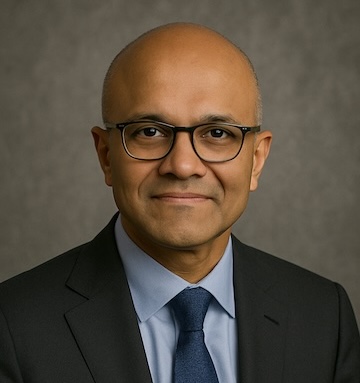
Satya Nadella’s leadership has been pivotal in steering Microsoft’s shift to cloud and AI — strategies that have reshaped the region’s tech employment mix and vendor ecosystem. Microsoft’s global R&D, cloud services (Azure), and enterprise product teams headquartered in the region continue to spin out startups, partnerships, and hiring that strengthen Puget Sound’s deep technical talent base.
Nadella’s push into platform AI and enterprise cloud has encouraged local organizations — universities, hospitals, and startups — to adopt cloud-native and AI approaches, which increases demand for local AI talent, creates new companies, and helps ensure the region remains technologically competitive
2.) Andy Jassy — CEO, Amazon

Andy Jassy’s leadership at Amazon anchors a huge portion of the region’s technology economy — from consumer commerce to cloud computing, and the company’s local campuses and hiring shape the Puget Sound labor market. Amazon’s continuing investments in local infrastructure, community programs, and large presence in downtown Seattle mean Jassy’s strategic choices ripple across the region’s tech ecosystem and real estate.
Regionally, Jassy’s decisions around AWS and e-commerce services influence how startups and enterprises in Seattle build, scale, and sell online. Amazon’s partner network, logistics footprint, and philanthropic programs also provide channels that connect small tech firms, non-profits, and workforce initiatives to capital and customers.
3.) Brad Smith — President & Vice Chair, Microsoft

Brad Smith is one of the most visible tech policy and community leaders in Puget Sound. Beyond his legal and policy stewardship for Microsoft, Smith has been central to Microsoft’s community investments in housing, civic causes and workforce development — shaping the social context in which Seattle tech grows. His voice in regional public debates (taxes, workforce, civic partnerships) gives the tech sector a direct channel into civic decision making.
Smith’s stewardship helps anchor partnerships between government, nonprofits and private technology leaders — for example, Microsoft’s multi-hundred-million commitments to affordable housing and regional programs. Those cross-sector collaborations have helped preserve talent pipelines and stabilize neighborhoods that tech depends on.
4.) Gabe Newell — Co-Founder, CEO, Steam Software

Gabe Newell and Steam have had a transformative impact on modern tech and gaming culture. As co-founder of Valve, Newell helped shape the PC gaming landscape by championing digital distribution long before it became mainstream. Steam not only revolutionized how games are bought, updated, and played but also created a global ecosystem for developers—indies and major studios alike—to reach audiences directly.
Newell’s emphasis on openness, user empowerment, and experimentation has influenced everything from platform economics to game design, making Steam one of the most influential forces in interactive entertainment and tech culture at large. His latest venture aims to seamlessly link PC gaming, handhelds (like the Steam Deck), and VR into one integrated experience by 2026. The platform reached a new all-time high of over 40 million concurrent users online, nearly doubling its numbers since March 2020.

5.) Kevin Scott — CTO, Microsoft
Kevin Scott has been a visible advocate for AI research, developer tools and startup engagement. His work advancing Microsoft’s developer platforms, AI initiatives and startup programs influences how engineering and research talent flows through Puget Sound, including collaborations with universities and accelerators.
Scott’s emphasis on developer experience and open platforms helps local founders build on scalable tools and attracts developer conferences, programs and talent into Seattle — strengthening the region’s reputation as an engineering hub for AI and distributed systems.
6.) David Baker — Director, UW School of Medicine Institute for Protein Design, Recipient of the 2024 Nobel Prize in Chemistry

A professor of biochemistry and the director of the University of Washington School of Medicine’s Institute for Protein Design, David Baker was awarded the 2024 Nobel Prize in Chemistry for his work on “computational protein design,” referring to the creation of new proteins that are not found in nature.
Rosetta Software, a key tool developed by his team, is crucial for predicting protein structures and designing new ones. Baker has co-founded more than a dozen biotech companies.
7.) Jay Graber — CEO, Bluesky

Jay Graber is the CEO of Bluesky, the decentralized social platform built around the AT Protocol—positioned as an alternative to highly centralized social networks. She came to prominence as Bluesky shifted from a Twitter-adjacent experiment into an independent organization with a distinct governance and architecture story.
Her leadership brand is “protocol-first”: focus on user portability (identity, followers, data), open ecosystems, and flexible moderation models that can be chosen by communities rather than imposed top-down. Coverage in 2025 highlights rapid user growth and her emphasis on building social infrastructure that can outlast any single company’s incentives.
8.) Mary E. Kipp — President and Chief Executive Officer, Puget Sound Energy

Under Mary’s leadership, PSE is undergoing the most significant transformation in its history, striving to meet Washington state’s clean energy laws — some of the most ambitious in the nation — while meeting customer expectations for the safe and reliable delivery of energy.
In a previous role, Mary was a prosecuting attorney for the Federal Energy Regulatory Commission for four years, investigating and prosecuting violations of federal energy laws. Mary also worked as a lawyer at El Paso Natural Gas Company and at Greenberg Traurig, LLP.
9.) Senthil Sankaran — Principal of the Amazon Housing Equity Fund

Senthil Sankaran spearheads Amazon’s $3.6 billion investment in affordable housing. As Principal of the Amazon Housing Equity Fund, Senthil is responsible for the deployment and management of Amazon’s commitment of over $2 billion in below market capital, in the form of loans and grants, to preserve and create over 20,000 affordable homes in Amazon’s ‘hometown’ communities, the Puget Sound region of
Washington State first among them.
Senthil also works at the nexus of cloud product strategy and commercial partnerships enabling local enterprises, startups and systems integrators to leverage cloud solutions and accelerate digital products across retail, health and logistics sectors.
10.) Brian Olsavsky — CFO, Amazon
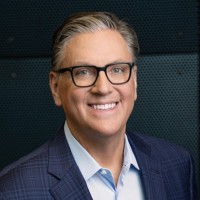
As Amazon’s CFO, Brian Olsavsky influences capital allocation decisions that affect hiring, investment in infrastructure and long-term strategic moves that shape the region. Even when not a product exec, a CFO of Amazon impacts data center expansion, R&D budgets, and investments that create or sustain thousands of regional tech jobs.
Olsavsky’s financial stewardship helps determine where Amazon directs long-term investments that ripple through the Puget Sound supply chain — from engineering hiring to local construction and vendor ecosystems.
11.) Rich Barton — Co-founder & Executive Chairman, Zillow Group (founder of Expedia)
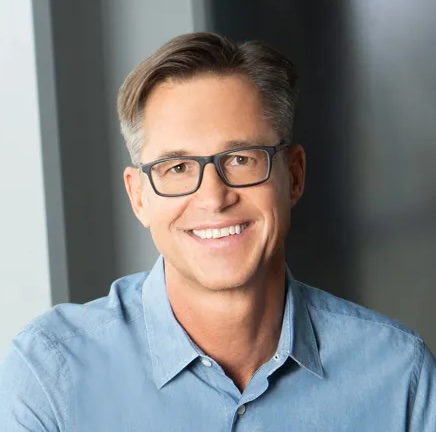
Rich Barton helped build some of the earliest and largest consumer Internet companies to come out of the region, fundamentally changing how people search, buy, and sell homes online. His companies (Expedia, Zillow, Glassdoor) have been foundational to Seattle’s consumer Internet reputation and have spun off founders and talent into the local startup ecosystem.
Barton’s continued involvement (mentoring, board roles, angel investing) helps seed new consumer-facing startups in the region and encourages engineering talent to build consumer products in Seattle rather than relocating elsewhere.
12.) Srini Gopalan — CEO, T-Mobile

Srini Gopalan brings extensive technology expertise to the CEO role, powered by a customer-centric vision for driving growth through innovation and technology transformation. Ascending from COO, he was formerly CEO of Deutsche Telekom’s Germany business, where he doubled the company’s growth rate, scaled its fiber business to millions of homes and achieved record mobile market share while earning market-leading customer satisfaction scores. He previously held senior leadership roles at Bharti Airtel, Capital One and Vodafone.
Gopalan is spearheading T-Mobile’s strategic initiative to become the most data-driven, AI-enabled, digital-first company in the industry bringing exceptional experiences to Un-carrier customers and advancing the company’s leadership in 5G and next-generation mobile networks.
13.) Samir Bodas — CEO & Co-founder, Icertis (Enterprise SaaS)

Samir Bodas leads Bellevue-based Icertis, a major enterprise contract lifecycle management SaaS company whose software automates legal and procurement workflows for large global customers. Icertis helped put high-end enterprise SaaS engineering jobs into the region and demonstrated that enterprise software at scale can be built and sold from the Puget Sound region. (Icertis and its leadership have frequently been included in regional technology lists and were represented among Power-type honors in recent years.) seattle24x7.com
Bodas’s company provides a model for enterprise SaaS founders in the area and has driven hiring of engineers, sales and product talent locally while showing global enterprise adoption coming out of Puget Sound.
14.) Rick Luebbe — CEO & Co-founder, Group14 Technologies

While Group14 is a hard-tech company, its innovations underpin critical infrastructure for electrification and IoT devices that rely on advanced battery tech. Rick Luebbe’s leadership attracted large rounds of capital and federal support, bringing high-tech manufacturing and engineering jobs to the state, which in turn deepen the region’s hardware + software talent nexus.
Group14’s growth helps diversify Puget Sound’s tech economy beyond software into advanced materials and manufacturing, supporting local supply chains and cross-disciplinary tech hiring.
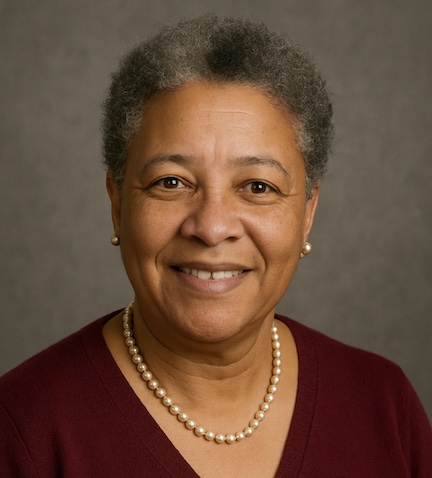
15.) Trish Millines Dziko — Co-founder & Executive Director, Technology Access Foundation (TAF)
Trish Millines Dziko leads TAF, a nonprofit that connects underrepresented youth to STEM and computing education — directly feeding the region’s future tech workforce. TAF’s programs increase diversity in the local talent pool so that Puget Sound companies have fuller access to a more representative pipeline of software engineers and technologists.
By focusing on K–12 pathways into tech, Dziko’s work has long-term impact on who builds the next generation of Internet products and services in the region — improving opportunity while strengthening the local economy.
16. ) Majdi Daher — Co-founder, Denali Advanced Integration (IT services & Cloud)

Majdi Daher’s Denali hires and trains hundreds of engineers and consultants who help enterprise customers across Puget Sound modernize systems and migrate to cloud architectures. Denali’s scale in IT services creates local career ladders for cloud engineers and consultants who in turn staff projects across healthcare, manufacturing and government in the region.
Denali’s growth helps regional companies adopt best practices in cloud and internet-facing systems, improving local digital resilience and enabling startups to outsource complex infrastructure work to local partners.
17.) Melinda French Gates — Founder, Pivotal Ventures
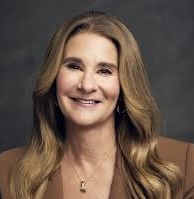
Melinda French Gates has played a significant role in the technology sector through her long tenure at Microsoft, where she joined in 1987 as a product manager. During her time at the company, she led the development and launch of several major consumer software products, including Microsoft Bob, Encarta, and various versions of Microsoft Office. Her work helped shape Microsoft’s early focus on user-friendly computing and household technology adoption, contributing to the company’s expansion beyond enterprise software into the consumer market.
Beyond her direct product work, Melinda emerged as a prominent advocate for women in technology, using her platform to address gender inequities within the industry. Through initiatives such as Pivotal Ventures, she has invested in organizations and companies that expand opportunities for women in tech, support diverse leadership, and work to close the gender gap in STEM fields. Her influence continues to extend across the broader tech landscape, not only through her early technical contributions but also through her ongoing efforts to create a more inclusive and equitable innovation ecosystem.
18.) Steve Ballmer — Ballmer Group CEO, Philanthropist

Steve Ballmer is the former CEO of Microsoft (2000–2014) who helped scale the company through the PC era’s later waves and into early cloud/enterprise transitions. After Microsoft, he became a major civic/data philanthropy voice through the Ballmer Group, with a style that’s famously energetic and metrics-driven.
Today, he’s also widely known as the owner of the NBA’s Los Angeles Clippers, where he’s combined fan-first showmanship with willingness to invest heavily in operations and infrastructure. In parallel, his philanthropy often focuses on economic mobility—backing efforts that try to measure what works and then fund it at real scale.
19.) Jody Allen — Owner, Seattle Seahawks, Trustee Paul G. Allen Trust
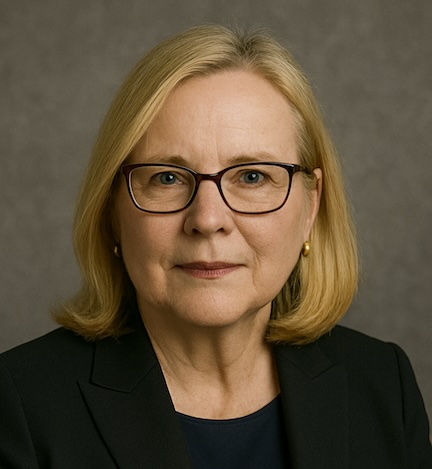
Jody Allen is best known as the trustee of the Paul G. Allen Trust, tasked with stewarding Paul Allen’s legacy and long-term philanthropic vision. Her public footprint is strongly tied to the Pacific Northwest’s institutions—especially those Paul helped found or fund.
In sports, she has served as chair of the Seattle Seahawks and Portland Trail Blazers franchises, and in philanthropy she’s associated with conservation priorities (including marine life and anti–wildlife trafficking work). Her role tends to be more “steward and operator” than celebrity figurehead—quietly maintaining continuity across complex assets and missions.
20.) Doug Bowser — President/COO, Nintendo of America
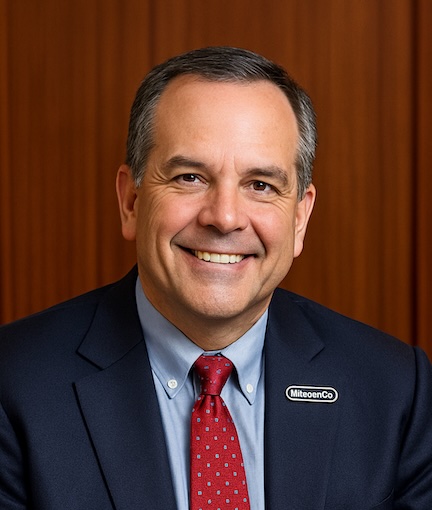
Doug Bowser has been the President and COO of Nintendo of America since 2019, following a career spanning brand/customer leadership roles before joining Nintendo. In the Switch era, Nintendo of America’s job has been equal parts: keep the brand culturally hot, keep families in the funnel, and execute big launches without losing Nintendo’s “playful trust.”
Most recently, Nintendo announced Bowser will retire at the end of 2025 (December 31, 2025), with Devon Pritchard slated to succeed him. That makes his legacy at NoA closely tied to late-Switch maturity, the transition into the next hardware cycle, and a steady hand on partnerships, retail, and fan-facing comms.
21.) Rob Glaser — Founder, Real Networks

Rob Glaser is the founder of RealNetworks, one of the early companies that helped define consumer internet audio/video (RealAudio, RealPlayer) and streaming media’s formative years. He previously worked at Microsoft, then went on to build Real into a widely recognized name during the “buffering bar” era of the web.
In recent years, Glaser has continued as a central figure around RealNetworks—serving as founder/chair/CEO—and led a take-private acquisition of RealNetworks, Inc. via an affiliate transaction that closed in 2022. Alongside business, he’s also been active in civic/philanthropic efforts (including through the Real Progress Foundation).
22.) Sunny Gupta — Executive Co-Chair, Smartsheet
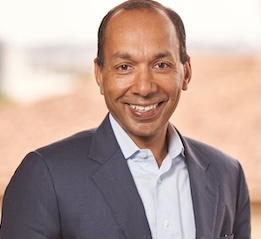
Sunny Gupta is best known as the co-founder and long-time CEO of Apptio, a major “technology spend management” company in the Seattle enterprise ecosystem that later became part of IBM. His reputation is that of an operator-founder: product-led, finance-literate, and comfortable translating messy IT realities into dashboards executives will actually use.
More recently, he has taken on leadership roles at Smartsheet—serving as Executive Chair, and (per recent board/company communications) stepping in as Acting CEO during a leadership transition. The through-line in his work is enterprise execution: strong instrumentation, clear accountability, and making large organizations run a little more “by the numbers.”
23.) MacKenzie Scott — Amazon Co-Founder, Philanthropist

MacKenzie Scott’s influence on the Seattle/Puget Sound region is tied to the scale of wealth and philanthropy that emerged alongside Amazon’s rise. While she keeps a relatively low public profile locally, her example has helped shape expectations among donors and nonprofits around faster, less bureaucratic giving and greater trust in community organizations to decide what they need most.
Globally, Scott has become a defining figure in modern philanthropy by giving away tens of billions of dollars through large, often unrestricted grants to thousands of nonprofits. Her “trust-based” approach—moving money quickly, minimizing red tape, and strengthening institutions rather than narrowly funding programs—has shifted norms for how large-scale charitable giving can work.
24.) Ron Vachris — CEO/President, Costco

Ron Vachris is Costco’s CEO and President (since January 2024) and is famous in business circles for rising through Costco from operational roles over decades—an internal-growth story that matches Costco’s “culture first” reputation. His leadership tends to be framed as continuity: keep the model disciplined, keep member trust high, and don’t break what works.
As CEO, he’s overseeing Costco in an era where scale, membership economics, and logistics excellence matter as much as retail theater. Public profiles emphasize his operational credibility and stewardship of Costco’s core playbook—limited assortment, tight markups, and employee stability—while navigating expansion and the modern pressures of labor, supply chain, and public scrutiny.
25.) Eva Macdonald— Seattle & Bellevue Site Lead for Meta

Eva Macdonald is the Northwest Lead for Meta in Seattle and Bellevue, where she oversees regional strategy and strengthens Meta’s presence across one of its key growth hubs. She partners with local leaders, aligns regional operations with company priorities, and supports the teams that drive innovation throughout the Pacific Northwest.
Known for her collaborative and people-focused approach, Eva fosters inclusive workplace culture and builds strong community and cross-functional relationships. Her leadership helps guide Meta’s regional impact, ensuring the Seattle and Bellevue offices remain vibrant centers of talent, engagement, and long-term strategic value. [24×7]